.png)
Online Auction Bidding Strategies That Help You Win Without Overpaying
Winning a liquidation auction requires more than just high bids. Professional buyers use specific tactics to turn excess retail inventory into value for their small businesses. These methods help you secure deep discounts while keeping your overhead low.
Effective online auction bidding strategies focus on maximizing value while avoiding the trap of overpaying by using proxy bidding to set your limits early. This system places incremental bids on your behalf to keep you in the lead without needing to monitor the clock every single minute. Many experienced bidders use late bidding to limit the reaction time of other people in the market. You must also factor in costs like the 13% buyer's premium and maintain the discipline to walk away when the price exceeds your budget. By combining pre-bid research with these automated tools, you can consistently win high-quality retail stock at deep discounts for your resale business.
Ready to put these strategies to work? Browse live auctions on QuickBidz and start bidding on liquidation inventory starting at just $5.00.
The right balance of timing and technology is the absolute key to winning more auctions on any platform. Understanding how proxy bidding works is the first step toward building a winning system.
Online Auction Bidding Strategies: How Proxy Bidding Maximizes Your Chances in Online Auctions
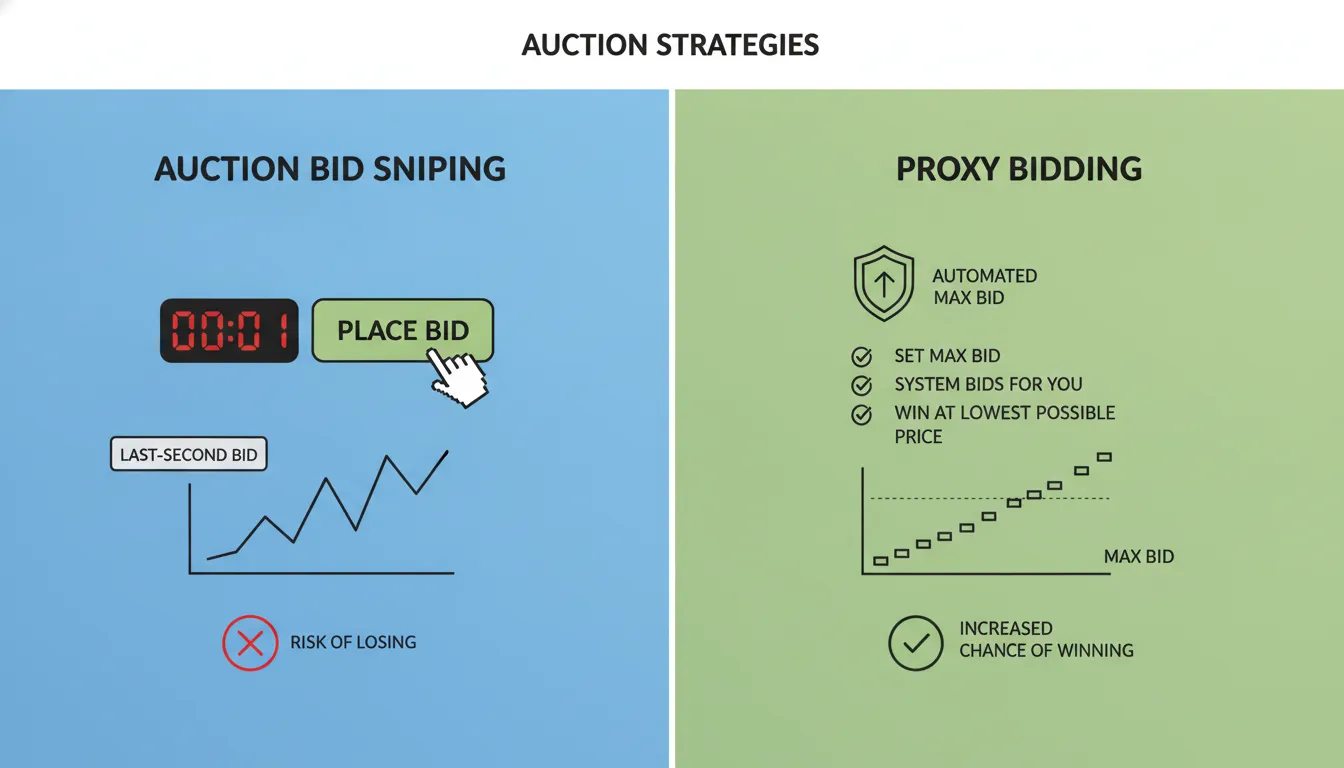
Proxy bidding is a key tool to improve your online auction bidding strategies. On QuickBidz, this system works like a personal helper. You decide the top price you want to pay for an item and enter that number as your max bid. The site then bids for you in small steps, only enough to keep you at the top of the list. This lets you join many sales at once without having to watch every screen.
Set Your Max Price Early
The core of proxy bidding is the auto-bid tool. When you set a max bid, the site keeps that price hidden from other buyers. If someone else bids, the site raises your bid by one small step. It keeps doing this until you win or the price goes above your limit. Using these auto-tools helps buyers stay active in busy markets. It removes the need for you to be at your desk during the last seconds of a sale.
This plan also helps you avoid paying too much. People often get caught up in the rush of a live sale and bid more than an item is worth. By setting your price early, you stick to your plan. You stay calm and follow your budget. You make a smart choice based on value, not on the heat of the moment.
Win the Tie with Early Bids
QuickBidz uses a first-in rule to break ties. If two people set the same max bid, the person who bid first wins. In one case, if you bid $200 at noon and another person bids $200 at 2 PM, you stay in the lead. This rule makes early bidding a strong move. It gives you a shield that others can only break by bidding more money. You do not just want to have the high bid. You want to be the one who got there first.
You can also use an odd-cent plan to break ties. Many people bid in round numbers like $50 or $75. If you bid $75.03 instead, you have a better chance to win. That extra three cents can be the way to beat a tie. It gives you an edge in tight races. It is a simple way to outsmart other buyers who do not plan as well.
Watch the Bid Steps Grow
The amount that a bid goes up is called a bid step. These steps are not the same for every item. On QuickBidz, the steps get larger as the price of the item grows. For a cheap item, the step might be just $5. For a big lot worth more money, the step could be $50 or more. The site sets these rules to make sure the sale moves at a fast pace.
Knowing these steps helps you pick the right max bid. You should look at the current price and the next bid needed. If you know the steps will jump soon, you might set your max bid a bit higher. This keeps you in the game as the price rises.
The proxy bidding system gives you a major edge by automating your bids up to a preset maximum. Combined with QuickBidz's first-in tiebreaker rule, setting your max bid early is one of the most effective online auction bidding strategies for busy resellers who manage multiple lots at once.
Sniping vs. Early Bidding: Which Strategy Wins More Auctions?
Choosing when to place your bid is a big part of how you apply advanced online auction bidding strategies. Some buyers wait until the clock is almost done before they jump in. Others like to set their limit early to hold their spot. Each path has good and bad points based on the rules of the site. At QuickBidz, the fixed clock changes how these moves work compared to sites that add time at the end.
How Bid Sniping Works
Sniping is the act of waiting until the final seconds of a sale to place a bid. The goal is to win before other buyers have a chance to see the new price and act. Late bidding is a common way to keep the final price low. By hiding your plan until the very end, you stop a bidding war that drives up costs. This move works best on sites that use a hard stop for the sale.
Does bid sniping work on every site? It depends on the rules for the close. Many sites use a soft close that adds more time after each late bid. But QuickBidz uses fixed windows that last from 10 to 48 hours. Since there is no soft close to add time, a fast bid in the last seconds can often take the win. You just have to be sure your web speed is fast enough to beat the clock.
The Case for Early Bidding
Bidding early is a new way to show you are a firm buyer. When you place a bid at the start, you show your plan to other people. This can sometimes scare off light buyers who do not want to fight for a lot. One big plus of bidding early is how the site picks a winner during a tie. If two people bid the same top amount, the one who bid first wins the item. Setting your price early gives you this spot right away.
This method also helps you stay calm during the sale. Last-second bidding can lead to stress and fast choices that you might regret. If you set a firm price at the start, you can walk away and let the system work. This style is great for busy sellers who manage many lots at once.
Finding the Right Balance
Should you bid early or late? Most pro buyers use a mix of both ways. For rare items, an early bid keeps your place in case of a tie. For common goods, waiting might help you get a lower price. You must also think about your own day. Flash sales move fast and need you to be ready when the deal ends. If you cannot be online at the exact close, bidding early is your best bet to stay in the game.
| Feature | Bid Sniping | Early Bidding |
|---|---|---|
| Main Goal | Hide your plan until the end | Claim your spot and show intent |
| Tie-Break | Likely to lose a tie | Wins if top bids are the same |
| Time Need | Must be online at the close | Set it and leave it |
| Risk Level | High stress in final seconds | Low stress with set limits |
| Reaction Gap | Cuts time for others to act | Gives others time to react |
What Should You Research Before Placing a Bid?
Top bidders do not wait for the timer to start before they make their move. They treat research as the most vital part of their plan. To master essential online auction bidding strategies, you must find the true cost of an item before you ever click the bid button. Many people lose money because they ignore small fees or fail to check the rules of the local site.
Master the Auction Rules
Every site has its own set of rules that tell you how a sale ends. You must know platform-specific rules first to avoid costly errors. For example, some sites use a soft close to add time, but others use fixed endings. Knowing if you are in a flash auction that lasts only 10 to 48 hours is also key. These short windows create intense pressure that can lead to bad choices.
Calculate the True Cost
The price you bid is not the final price you pay. Most sites add a fee to the winning total. You must factor in a 13% buyer's premium on all winning bids at QuickBidz to stay within your budget. If you ignore this fee, you could end up paying more than the item is worth at retail stores.
Research Market Value First
Do not guess what an item is worth. You should research item value before bidding to find a hard limit for your max bid. Look at recent sales on other sites to see the fair market price. Once you have this number, you can set a max bid before the auction starts to keep your mood in check.
Your Pre-Bid Checklist
- Check for a Buy Now price to see if you can skip the auction and lock in a deal.
- Check the location of the item to see if you can use local pickup.
- Find the total cost with the 13% fee and any taxes.
- Set your max bid based on real market data rather than how much you want the item.
- Check the time left to plan your final move during the high-pressure window.
True Cost Math Example
If you bid $100 on a laptop, your total bill will be higher than that amount. With the 13% fee, your cost jumps to $113 before tax. Choosing local pickup can save you 30-50% on total costs by cutting out shipping fees. Always do this math before you commit to a bid to ensure the deal still makes sense for your business.
How to Avoid the Winner's Curse in Competitive Auctions
The winner's curse happens when you win an auction but pay more than the item is worth. This often occurs because the heat of a fast sale makes people act on a whim. You might feel a strong rush to win, even if the price goes past your original plan. Staying calm is the first step to finding real value in liquidation deals.
Spot Bidding Triggers Based on Feelings
Winning an auction can feel like a game or a sport. This feeling often leads to bidding based on mood, which is a major risk for any buyer. When you see a clock counting down, your brain may tell you to bid again just to stay in the lead. This quick style is common among people who are new to the site.
Experienced bidders act with less haste than those with less practice. Pro buyers follow a clear plan instead of acting on every move a rival makes. To get better results, try to act like a pro. Keep your focus on the value of the goods and do not let the thrill of the chase take over your logic.
Set Firm Walk-Away Limits
Self-control is the best tool you have to protect your cash. You must know your stop point before you place the first bid on an item. Start by setting a firm top bid based on what the item is worth to you. Once the price hits that limit, you must stop and walk away from the deal.
- Research the retail price of the item first.
- Decide on the most you are willing to pay.
- Add the 13% premium to your math.
- Check for local pickup to save on shipping.
QuickBidz adds a 13% buyer's premium to all winning bids. This fee can change a good deal into a bad one if you forget it. By using smart online auction bidding strategies, you can find the total cost before you start. This math must include the premium, tax, and any shipping costs.
Check Item State and No-Return Rules
Liquidation goods often come with some risks. Many items are sold as "Open-Box" or "Pre-Owned." This means they were used or handled before they got to the auction. At QuickBidz, these items usually have no returns allowed once the sale is done. If you pay too much for a broken item, you could lose a lot of money.
Always read the item info to see exactly what you are buying. If you cannot see the item in person, look at the photos and the list of goods. Include the cost of repairs or cleaning in your top bid. Knowing that a sale is final helps you stay steady when the bids get fast. This careful path is how you win without the pain of the winner's curse.
The winner's curse is avoidable when you treat every auction as a business decision, not a competition. The most profitable online auction bidding strategies always start with a firm walk-away limit that accounts for fees, shipping, and the item's true market value.
Timing Your Bids for Maximum Impact in Flash Auctions
Flash auctions at QuickBidz move at a fast pace. These events usually run for just 10 to 48 hours, which creates high pressure and fast competition. To win without overpaying, you must know how to time your entries. While some platforms use a soft-close to stop last-second bids, QuickBidz does not. This means the clock stops exactly when it says it will. To succeed, you need to match your timing to the specific rules of the site. You must stay alert as the final minutes approach to ensure your bid stays on top.
The Choice Between Early and Late Bids
There are clear trade-offs when you decide when to place your bid. Bidding early shows other people that you want the item, which might scare some off. However, it also gives your rivals plenty of time to outbid you. Late bidding, often called sniping, is a common way to minimize the time others have to react. Since there is no soft-close here, the final seconds are vital. If you cannot be online at the very end, you should set a max bid and let the system handle the rest for you. This helps you keep a firm limit on your spending.
Strategic Use of Countdown Timers
You should use the auction clock to your advantage. Watching the timer helps you see when an item is about to close so you can act fast. Since you must monitor bids in real time on sites without soft-close rules, staying focused in the final minutes is key. If you are tracking multiple items, keep a tab open for each one. This allows you to jump in if someone tops your bid right before the end. You can also use phone alerts to stay updated. Using these smart online auction bidding strategies helps you stay ahead of the crowd.
Finding Off-Peak Opportunities
Not every hour of the day is equal in an auction. You can often find lower competition during off-peak times when fewer people are online. Early mornings or late nights are great times to look for deals that others might miss. During these quiet hours, you might win items for less because there are fewer active rivals. The middle of the work week is another good time to browse for low prices. Always check the platform rules first to ensure you know exactly when each auction ends. Planning your bids around these low-traffic windows is a simple way to get better value for your money.
Flash auctions require a mix of speed and planning. By knowing when to bid and when to wait, you gain an edge over casual buyers. Keep your focus on the closing times and use the tools the platform gives you. A well-timed bid is often the difference between a great win and a missed chance. Stay disciplined and keep your max price in mind at all times.
Frequently Asked Questions
How can I win online auctions without overpaying?
Winning without overpaying starts with a set max bid. You must count the 13% buyer's premium and shipping costs in your plan before you bid. Many bidders fail because they get too excited during a live sale. Stick to your top price and walk away if the price goes too high. This keeps you from paying more than the item is worth.
Does bid sniping work on QuickBidz auctions?
Yes, bid sniping can be a good tool on QuickBidz. Unlike many sites, QuickBidz has no soft close. This means the clock does not reset when someone bids at the last second. Late bidding gives others less time to react. You can place your bid in the final seconds of a flash auction to catch rivals off guard and win the item.
What is proxy bidding and how should I use it?
Proxy bidding is an auto-bid tool that helps you stay in the game. You enter the most you are willing to pay, and the system bids for you in small steps. This keeps you in the lead until the price hits your limit. It is a great way to stay on track. The system only bids as much as needed to beat the current high bid.
How do off-peak times impact my bidding strategy?
Bidding during off-peak times can help you find better deals. Rivals are often fewer late at night or during the middle of the work week. With fewer active bidders, you are less likely to get into a fast-paced bid war. This move allows you to win items at lower prices. Always check the end times for flash auctions on QuickBidz to find those quiet windows where others are not watching.
What is odd-cent bidding and does it help?
Odd-cent bidding is a smart way to break ties in a sale. Many people bid in round numbers like ten or twenty dollars. If you bid an odd amount like ten dollars and one cent, you may win the item. QuickBidz rules say that the first person to reach a bid amount wins the tie. This small move can help you beat other bidders without spending much more.
Ready to Start Winning Your Next Online Liquidation Auction?
Every second you wait, other bidders are grabbing the top liquidation deals and saving the best profits for themselves. Starting your bid right now makes sure you do not miss out on the best pallets before the clock runs out. You need to get your stock at a price that leaves you plenty of room for profit in your own shop. If you keep watching from the side, you will only see the best items go to your rivals who act fast. Take control of your sourcing today and build the stock you need to grow your business without any more delay.
Ready to contact us? Browse live deals to start bidding on QuickBidz liquidation auctions.